
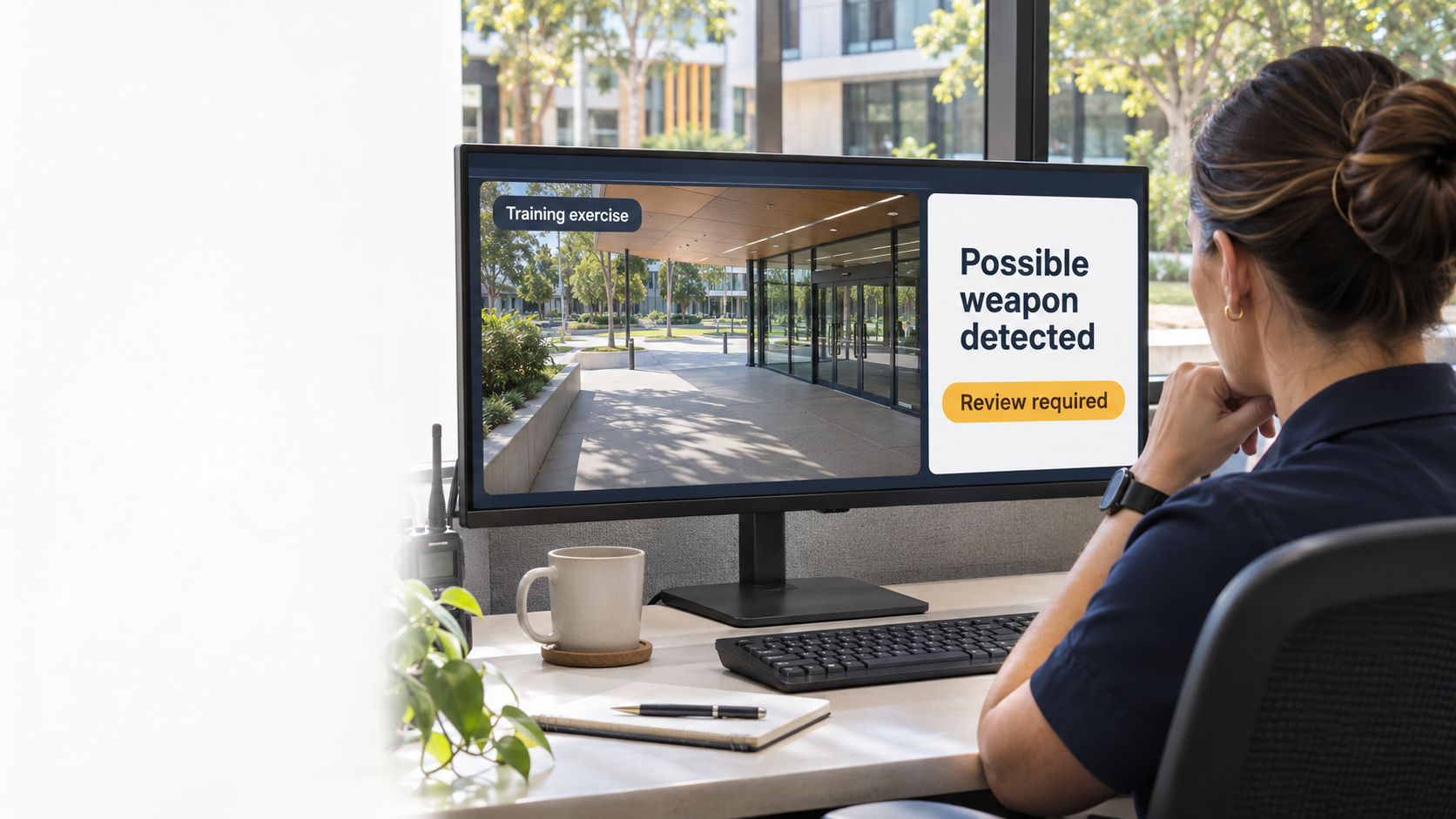
In a threat, minutes matter. Weapon detection is built to shorten the gap between a weapon appearing on camera and a person seeing it.
What is AI weapon detection?
It is a computer-vision model that looks for the shape of a gun or other weapon in video frames. When it sees one, it sends an alert with a snapshot, camera location and time to the people responsible for responding.
How does the alerting work?
The model runs at the edge, beside the cameras, so detection does not wait on a cloud round trip. An alert goes to the dashboard and to the iOS or Android app with the snapshot, alert type, location and details, and by SMS for people who are not at a screen. The goal is a human looking at the image within seconds.
Why does human verification matter?
Weapon detection models can make mistakes. They can miss a partly hidden weapon and they can flag a tool, toy or phone. Every alert should be reviewed by a trained person before action is taken, and your response plan should say who reviews, who decides and who is called. Treat the system as an early warning, not a verdict.
What affects detection quality?
- Camera resolution, angle and distance
- Lighting and glare
- Whether the weapon is carried openly or concealed
- Crowding and obstructions
Place cameras at entrances and approach routes where people are visible at a usable distance, and test with your own cameras and with training props agreed with your security team.
Can it combine with other signals?
Yes, and that is where it gets more useful. A weapon alert plus a face match to a barred person, or a lone person at a closed site at night, gives responders more context. FaceTagr's platform supports face recognition, person rules and object detection together.
Where is it used?
Schools and campuses, hospitals, malls and entertainment venues, transport hubs, places of worship, banks and cash-handling sites, and government and defence sites. Patrol vehicles can also carry a compact unit for real-time detection on the move.
What about privacy, ethics and regulation?
Use it for a defined safety purpose, inform people that analytics are in use, limit who can see alerts and footage, and keep records of reviews. Rules on video analytics and biometrics vary by country, so take local legal advice. Where possible, avoid storing footage or faces you do not need.
What does it cost?
Cost depends on the number of cameras and sites. Because FaceTagr runs on lean edge hardware and does not require a cloud service for each alert, you can start with the entrances that matter most and grow. NBOX is starting from ₹5 Lakhs (~$6,000 USD). Contact us for a quote.
The takeaway
Weapon detection gives your team seconds back. Pair it with trained responders, clear procedures and the physical measures you already have. Want to see a demo? Use the enquiry form below.