Impersonation, proxy candidates and shared admit cards affect entrance tests, professional certifications, civil-service exams, recruitment drives and remote proctored sessions in every region. The identity problem is the same everywhere: a stranger, a queue, a deadline and no room for error.
What is exam candidate verification?
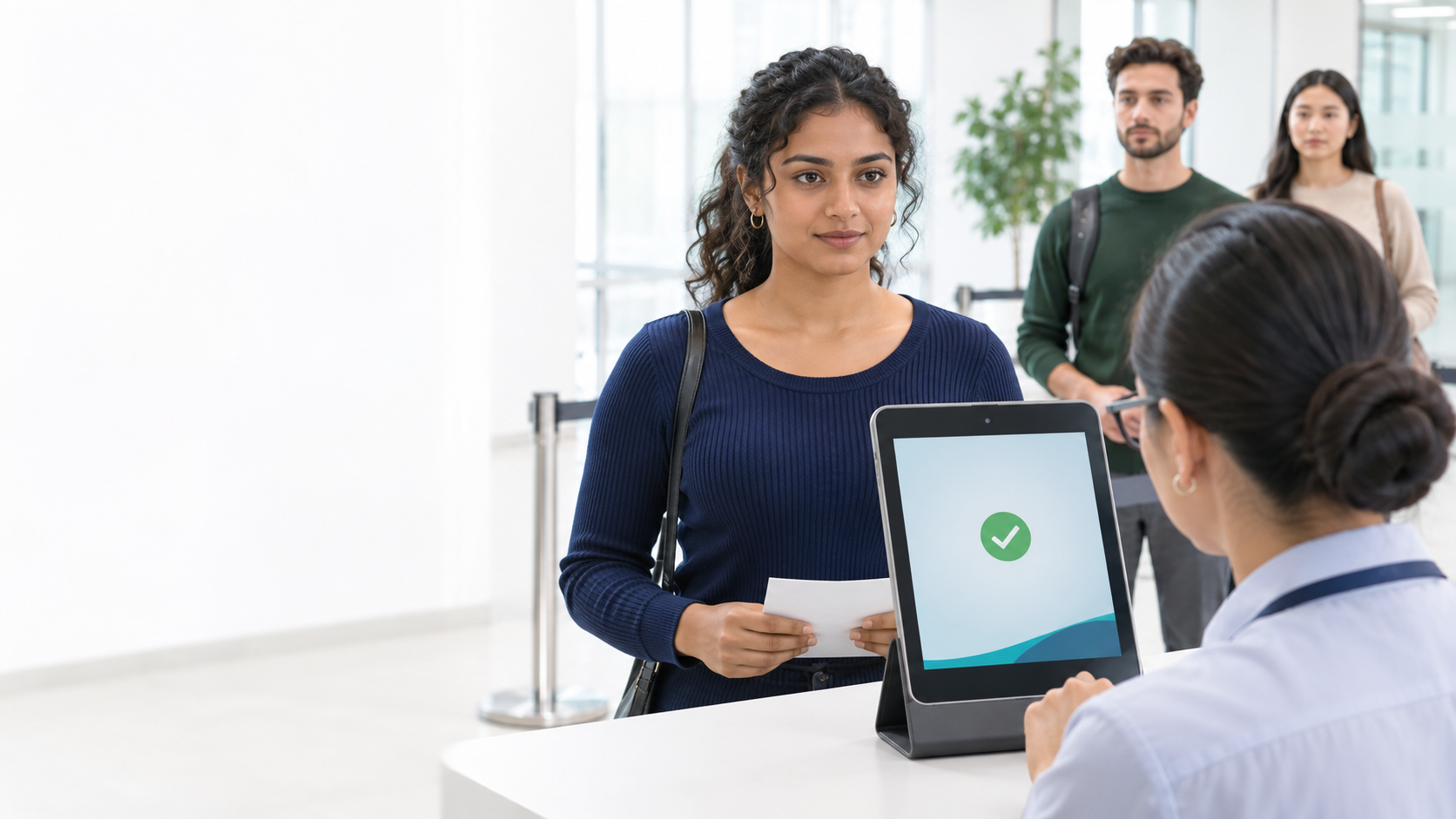
It is the step that proves the person at the desk is the person who registered. Instead of a quick glance at an ID card, a device compares the candidate's live face with the photo on file and records the result with a time and location. A mismatch goes to an invigilator for a second look.
Has face recognition been proven at this scale?
Yes. In the Bihar state elections, FaceTagr ran on more than 3,500 devices and completed over 10 million face checks. More than 5 million of those compared live faces with voter ID photos that were 30 years old or more. We have also run a mobile voting pilot with 50,000 voters. Exams share the same shape, only smaller.
Can face recognition work with old or low-quality reference photos?
It has to. Admit-card and registration photos are often old, small or badly lit, and a system tuned on clean studio images falls apart on them. FaceTagr's engine is our own, built and tested on this kind of messy reference data, and it is NIST-benchmarked. It has been used across skin tones, lighting conditions and camera quality in India, the Middle East, Africa and Australia.
Do exam centres need special hardware?
No. The FaceTagr SDK runs on ordinary Android and iOS devices, including a tablet that costs about $100 (Android 10 or later and 3 GB RAM). Invigilators can use their own phones. That removes the cost of buying, shipping and installing terminals at every centre.
Does verification work without internet?
Yes. Matching happens on the device, so verification continues in concrete halls and rural centres with no signal. Results are stored locally for up to 60 days and synced to your dashboard when a connection is available.
Is it fast enough for a queue of thousands?
Recognition takes under a second. Speed matters for security as much as for convenience, because a slow check gets skipped. Passive liveness runs in the same moment and stops a printed photo or a phone screen from passing as a person, without asking candidates to blink or turn their head.
What data do you keep, and what do regulators care about?
Each check can log time, GPS location (with optional geo-fencing) and the result, without storing an image. During enrollment the registered photo becomes an encrypted template and the original is deleted. Biometric rules differ by country (for example GDPR in Europe and the UK, BIPA in Illinois and the DPDP Act in India), and all of them reward collecting less and keeping it local. Your legal team should still set the consent and notice for each exam body and region.
How does the process work, step by step?
- Load registered candidate photos and IDs once. Each photo becomes an encrypted template.
- At the centre, the invigilator verifies each candidate 1:1 against their record. For walk-in or group entry, a 1:N check finds the candidate from a gallery of up to 2 lakh (200,000) photos.
- Results sync to your dashboard when online, and flagged cases are reviewed.
How much does it cost?
Accuracy at this level should not be limited to national budgets. The SDK is from $3 per user per year. Liveness included. No per-check fees. Contact us with your candidate numbers and centre count for a quote.
The takeaway
Impersonation is a data integrity problem, and the answer is a fast, offline-capable check that runs on any device. If you run entrance exams, certification tests, recruitment drives or proctored sessions, we can set up a pilot with your own candidate data.